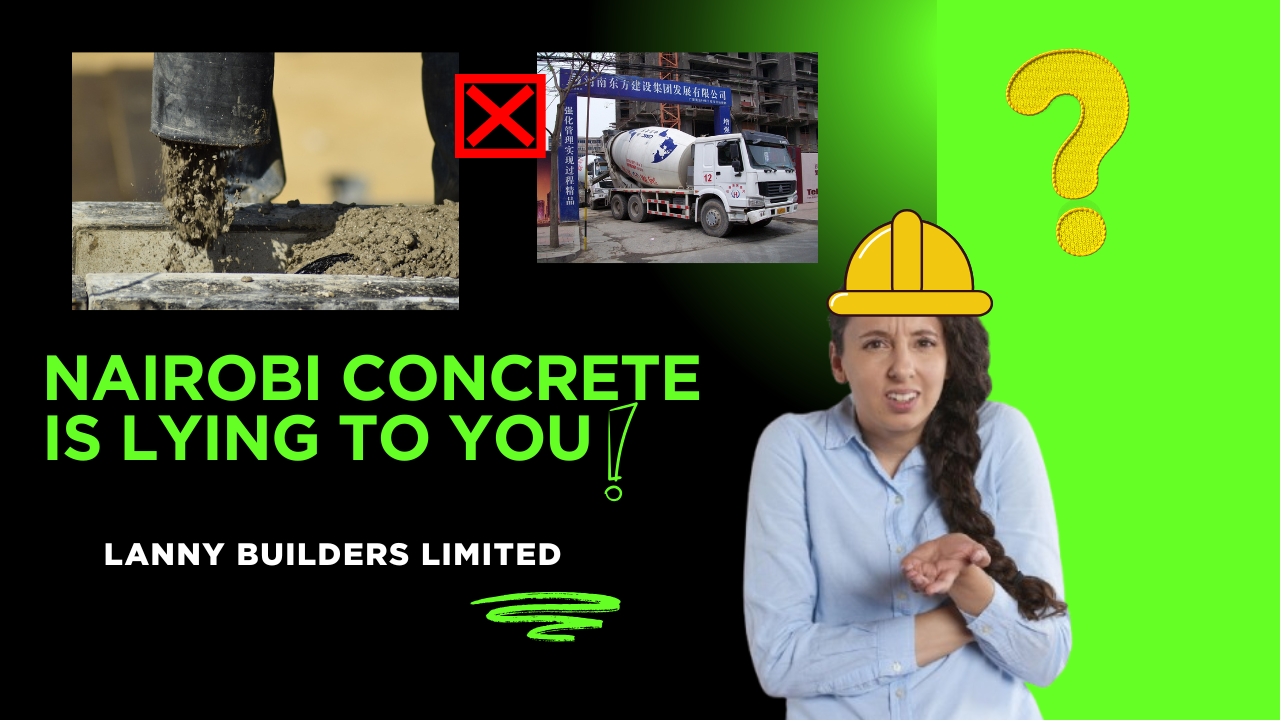
Let me tell you something most contractors won’t admit over chai at the site office: that grey stuff you see being poured everywhere? It’s not just concrete. Not really. And in Kenya’s brutal climate, treating it like generic concrete is how buildings start cracking before the paint dries.
I’ve watched too many developers in Runda, Kilimani, even out in Kitengela, choose the cheapest mix design because “concrete is concrete.” Then they wonder why their foundations weep during long rains or their driveways crumble under that relentless equatorial sun. Here at Lanny Builders, we don’t just pour concrete. We engineer climate survivors.
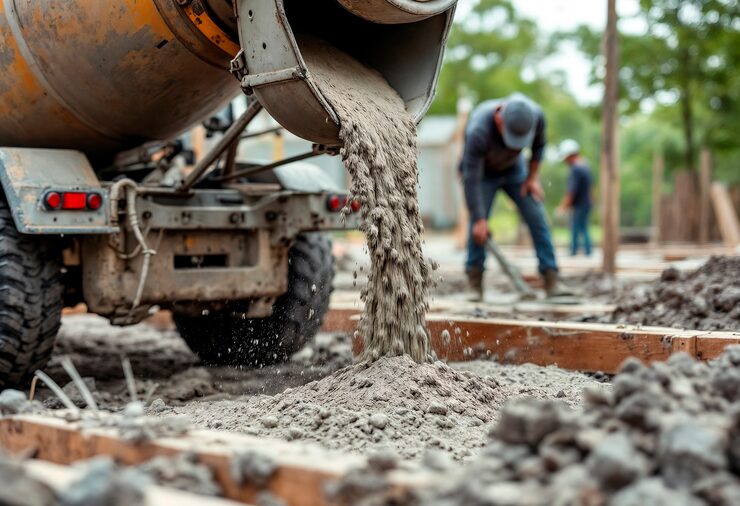
The Kenyan Reality: Where Concrete Goes to Die
Picture this: Your typical Nairobi contractor orders “C25” concrete. Standard stuff. But when temperatures hit 35°C by 10 AM and humidity clings like a second skin, that standard mix becomes a time bomb. Water evaporates too fast. Curing becomes a guessing game. The result? Surface dusting, micro-cracks invisible to the naked eye, and structural weakness that whispers promises of future repairs.
We learned this the hard way back in 2019 on a project near Jomo Kenyatta Airport. The client wanted fast completion. We pushed back. Why? Because standard concrete poured at noon in March doesn’t cure—it just bakes. That project taught us Kenyan concrete needs Kenyan solutions.
Our Secret Weapon: Climate-Specific Mix Designs
Forget what the textbooks say. We’ve spent years collaborating with materials engineers from some the biggest cooperations in Nairobi to develop mix formulas that laugh at our weather extremes. Here’s what makes the difference:
For Nairobi’s Highland Heat (Above 1,700m):
We reduce water content by 12% and add volcanic ash from Suswa. Sounds exotic? It’s brilliant. The ash fills microscopic gaps normal cement misses, creating a denser matrix that resists thermal shock. Your foundation won’t expand and contract like cheap rubber when afternoon temperatures swing 15°C.
Coastal Nightmare Zones (Mombasa, Malindi, Kilifi):
Salt air eats standard concrete for breakfast. We triple-test chloride resistance and incorporate crushed coral aggregate from certified sustainable sources. Yes, coral. But not the kind harming reefs—the geological deposits approved by KEBS. This creates a chemical barrier against salt penetration that lasts decades longer than conventional mixes.
Arid Zone Warriors (Kitui, Machakos):
Here, evaporation steals moisture before concrete gains strength. Our solution? Super-plasticizers that work like time-release capsules, holding water molecules hostage until proper curing happens. We’ve seen projects where other builders’ concrete failed slump tests before reaching site. Ours arrives ready for battle.
The Moment That Changed Everything
Last year, we had to walk away from a project. The client insisted on using their “preferred supplier” for concrete. Fine print revealed they wanted standard C30 mix for basement walls—no adjustments for water table pressure or seasonal flooding.
We showed them core samples from a similar project where corners had been cut. The concrete resembled Swiss cheese after just two rainy seasons. Cost us the contract, but saved their future headaches. Sometimes professionalism means saying no.
Why This Matters for Your Wallet (Not Just Your Walls)
Think this technical talk doesn’t affect you? Consider this: Proper climate-specific concrete costs about 8% more upfront. But it eliminates Ksh 2-4 million in repairs over a building’s lifetime. No spalling facades. No emergency crack injections during rainy season. No structural engineers shaking their heads at five-year-old buildings.
Our clients in Nyali told us last month: “We expected beach house maintenance to break us. Five years in, not a single crack.” That’s the power of getting the mix right from day one.
The Bottom Line No One Talks About
Concrete isn’t a commodity. It’s the skeleton of your dream home or commercial space. In Kenya’s unforgiving climate, that skeleton needs specialized armor. Most builders pour what’s easiest. We engineer what lasts.
When you see our trucks arriving at your Thika Road project or your Ukunda resort site, know this: That’s not just concrete in those mixers. It’s months of lab testing, years of field failures turned into wisdom, and a stubborn refusal to accept “good enough” when “exceptional” keeps roofs over families’ heads for generations.
Ready to build something that laughs at Kenya’s weather extremes? Let’s talk mix designs—not just square meters. Your future self will thank you when the next El Niño season comes knocking.
Allan Musyoka, Lead Engineer & Founder, Lanny Builders Limited
Building legacies that outlive trends since 2012
P.S. Ask us about our free site assessment—where we test your soil conditions and climate exposure before recommending a single bag of cement. No pressure. Just professional insight that might save you millions down the road.