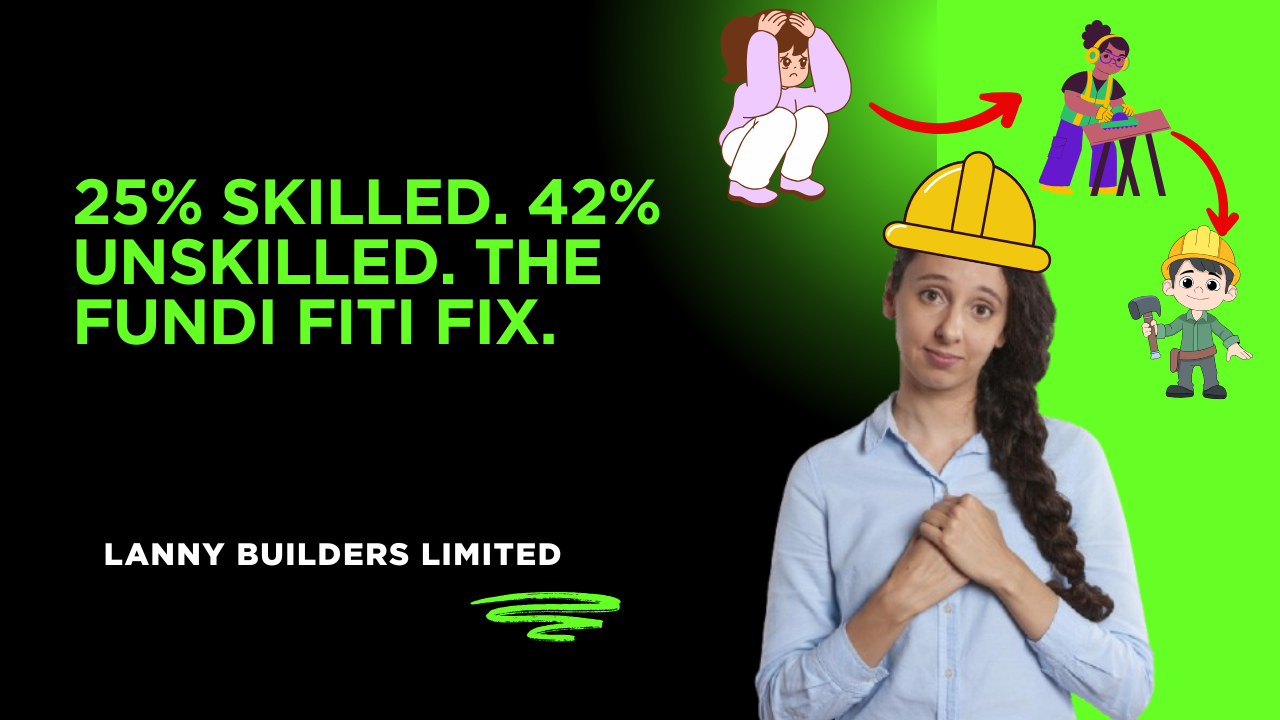
Here is a number that should worry every contractor in Kenya: 42 percent.
That is the proportion of Kenya’s construction workforce that is completely unskilled. Another 33 percent are semi-skilled. Only 25 percent are skilled.
To put it another way: more than two-thirds of the people building Kenya’s homes, offices, and infrastructure lack formal training in the trades they are practicing. They are learning on the job, often from other workers who also never received formal instruction.
This is not sustainable. It is not safe. And it is a direct threat to the Affordable Housing Programme, which requires quality construction at speed.
This is the gap that the Fundi Fiti initiative is trying to close.

The Numbers Behind the Crisis
Kenya’s construction workforce numbers make sobering reading.
According to National Construction Authority (NCA) data, the industry has approximately 2,000 certified plumbers, masons, and painters . By contrast, there are 5,000 registered engineers . That means more people are qualified to draw the plans than to actually build them.
This is the inverse of what a healthy construction industry needs. Engineers are essential, but they are only one part of the equation. Without skilled tradespeople, the best designs remain on paper.
The shortage is most acute in the trades that form the backbone of construction:
- Plumbing – every building needs water and sanitation systems.
- Electrical installation – power, lighting, and connectivity are universal requirements.
- Masonry and bricklaying – the structural core of most buildings.
- Painting and finishing – the final quality that clients see and judge.
Yet these trades have the fewest certified professionals entering the workforce. The formal training pipeline is broken.
Why the Skills Gap Exists
The reasons for the shortage are not mysterious. They are structural.
First, vocational training has been undervalued. For decades, Kenyan parents and students have prioritised university degrees over technical qualifications. A certificate in masonry is seen as less prestigious than a degree in business administration, even though the mason may earn a steady income while the graduate struggles to find work.
Second, the training system is supply-driven. Technical and Vocational Education and Training (TVET) institutions decide what courses to offer, often without consulting employers. The curriculum may not match what contractors actually need on site. Graduates emerge with theoretical knowledge but without practical experience.
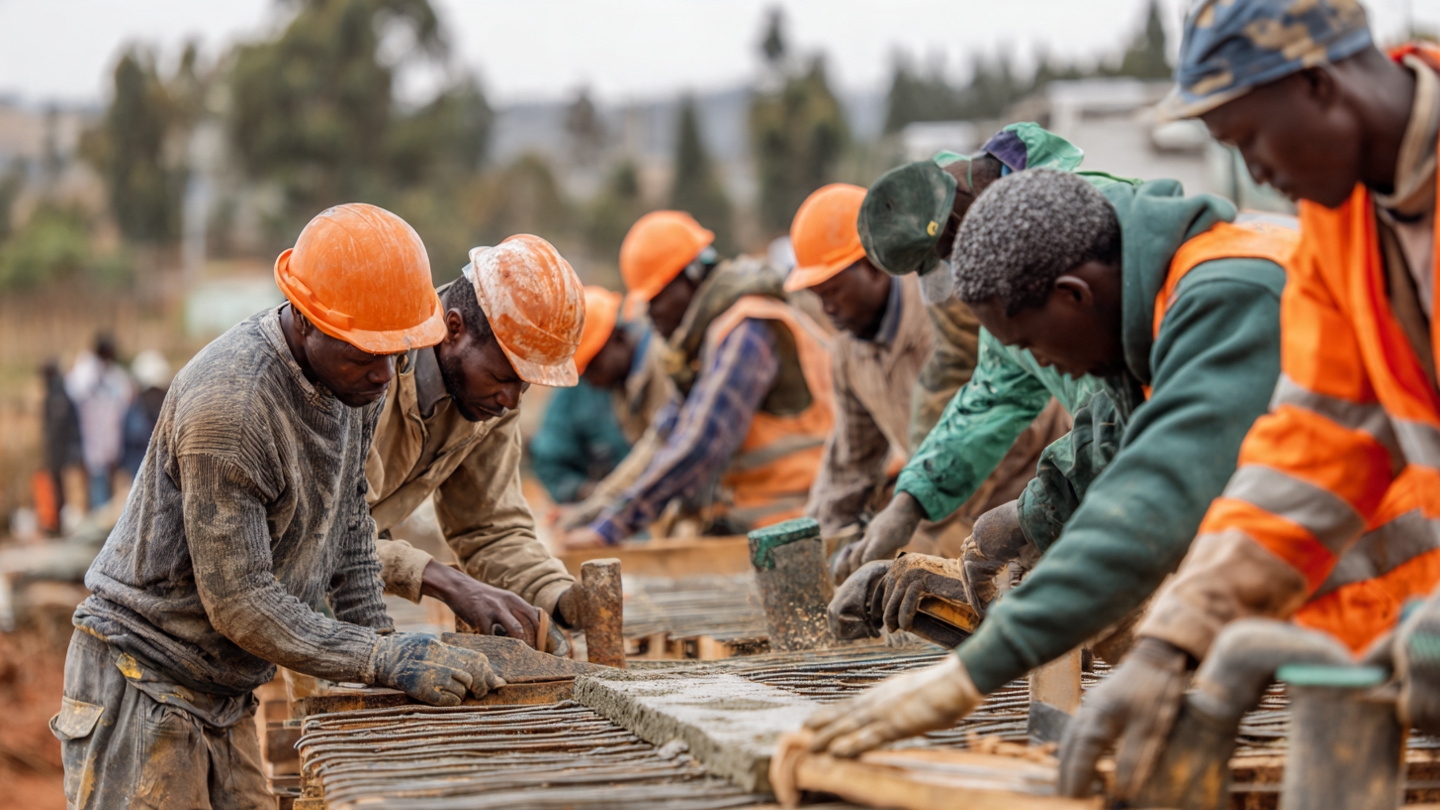
Third, informal training is the default. Most workers learn by doing. A young person joins a construction site as a general labourer. They watch older workers. They pick up skills over time. This can produce capable workers, but it is inconsistent. It does not cover safety, quality standards, or modern techniques.
Fourth, the industry does not invest in training. Contractors under pressure to deliver cheaply have little incentive to train workers who may leave for another firm. There is no industry-wide system for skills development, and employers are not required to contribute to training funds.

Fundi Fiti Steps In
The Fundi Fiti initiative is a public-private partnership designed to address these gaps. It brings together industry, government, and training institutions to create a structured pipeline of skilled workers.
The initiative is named deliberately. Fundi means craftsman or artisan in Swahili. Fiti means excellent or top-tier. The name signals the ambition: to produce not just any workers, but excellent ones.
The approach is hands-on and practical:
- Industry-led curriculum: Employers define the skills they need. Training institutions teach those skills.
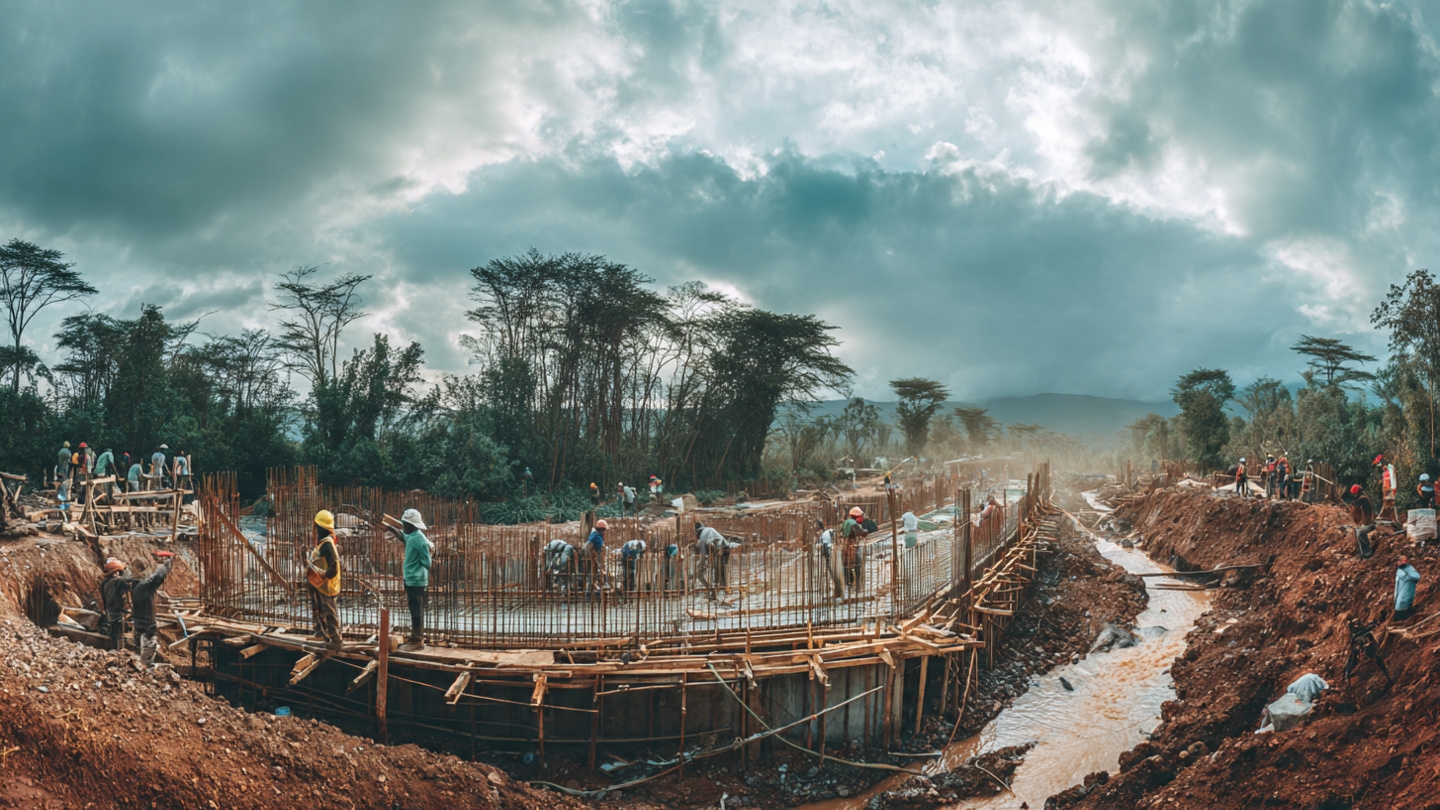
- Apprenticeship-based learning: Students spend significant time on real construction sites, working under supervision.
- Certification: Graduates receive NCA-recognised credentials that employers can trust.
- Mentorship: Experienced workers mentor apprentices, passing on knowledge and professionalism.
The initiative focuses on the trades where the shortages are most acute: plumbing, electrical, masonry, painting, and finishing.
The Swiss Connection
The Fundi Fiti model draws on international best practice, particularly from Switzerland’s dual vocational training system. In Switzerland, apprentices spend most of their time in workplaces, learning from experienced mentors, with classroom instruction integrated around practical work.
This model has produced one of the most skilled workforces in the world. Swiss employers have confidence in vocational graduates because they know exactly what training those graduates have received.
The Fundi Fiti initiative adapts this model to Kenyan conditions: local materials, local construction methods, local employers. The principle is the same: learn by doing, with structured support and clear standards.
What This Means for Contractors
For builders and contractors, the Fundi Fiti initiative offers real benefits.
First, access to trained workers. Contractors participating in the initiative can hire graduates who have been trained to their specifications. No more spending weeks retraining new hires on basic skills.
Second, reduced training costs. Instead of bearing the full cost of on-the-job training, contractors share that responsibility with training institutions and government. The apprentices are productive from early on.
Third, better quality. Workers who have been trained formally understand safety, quality standards, and modern techniques. They make fewer mistakes and require less supervision.
Fourth, a reliable pipeline. The initiative produces a steady stream of graduates. Contractors who participate can plan their workforce needs more predictably.
Fifth, competitive advantage. In a market where most contractors complain about skills shortages, those with access to trained workers will deliver better results, faster, and more profitably.

What Contractors Need to Do
If you are a contractor looking to benefit from Fundi Fiti, here is what to consider.
First, get involved. The initiative relies on employer participation. Hosting apprentices, providing mentorship, and giving feedback on the curriculum are all ways to contribute—and to benefit.
Second, be clear about your needs. The industry-led curriculum works best when employers are specific about what skills they need. Tell training institutions which tools, techniques, and standards you expect.
Third, commit to the long term. Training apprentices takes time. The benefits are not immediate. But contractors who build relationships with training institutions and apprentices will have a workforce advantage over those who do not.
Fourth, register with NCA. NCA registration opens access to the authority’s training and certification programmes. It also signals to clients and partners that you are serious about quality.
Fifth, invest in mentorship. The most successful apprenticeship programmes have strong mentorship. Assign experienced workers to guide apprentices. This builds loyalty, transfers knowledge, and improves quality.

The Bigger Picture
Kenya’s construction sector is growing. The Affordable Housing Programme alone aims to deliver hundreds of thousands of new homes. Other infrastructure projects add to the demand.
But this growth cannot be sustained with a workforce that is only 25 percent skilled. The quality of buildings will suffer. Construction costs will rise. Safety will be compromised.
The Fundi Fiti initiative is one of the most promising efforts to address this crisis. It is not a quick fix. Changing the workforce takes years of sustained effort. But it is a start.
For contractors, the message is clear: the skills gap is not going to close by itself. It requires action. Employers who invest in training will find that they are not just helping the industry—they are helping their own businesses.
The skilled workers of 2030 are in schools, workshops, and apprenticeship programmes today. The question is whether you will help train them—and then hire them.
| Key Data Point | Detail |
|---|---|
| Skilled workforce | 25% |
| Semi-skilled workforce | 33% |
| Unskilled workforce | 42% |
| Certified plumbers/masons/painters | Approximately 2,000 |
| Registered engineers | Approximately 5,000 |
| Initiative name | Fundi Fiti |
| Meaning | “Excellent craftsman” |
| Focus trades | Plumbing, electrical, masonry, painting, finishing |
| Model | Swiss dual vocational training (adapted for Kenya) |
| Key principle | Industry-led, apprenticeship-based, NCA-certified |
| Benefits for contractors | Access to trained workers, reduced training costs, better quality |