For years, a familiar sight across Kenya told a quiet story of broken promises. Rusting graders sat idle beside half‑finished bridges. Roads that should have linked markets were abandoned mid‑way. Contractors had simply downed tools and walked away.
The cause was not a shortage of skilled labour or a lack of technical know‑how. It was a mountain of unpaid bills that had buried the entire road sector.
When President William Ruto took office in 2022, more than 580 road projects were on hold, tied up in debts that had swollen to an astonishing Sh175 billion. Contractors had stopped working because the government had stopped paying.
What followed was not another loan. Not a plea for more taxes. Instead, the government reached for a financial instrument rarely used on this scale in Kenya: securitisation.
The Backlog That Broke the System
The crisis did not happen overnight. For years, the government had been spending more on roads than it could afford, leaving a trail of verified certificates that were simply not honoured.
By October 2024, then‑Roads CS Davis Chirchir was publicly admitting that pending bills had reached Sh173 billion, forcing contractors to abandon major infrastructure projects halfway. The Kenya National Highway Authority alone was collapsing under the weight of Sh86 billion in unpaid dues.
Contractors, especially small and medium‑sized firms, were hit hardest. They had already bought materials, hired labour, and leased machinery. When payments did not arrive, they had to service bank loans, pay salaries and keep equipment running out of their own shrinking cash reserves.
The construction sector, which should have been a pillar of the economy, slipped into a technical recession, recording two consecutive quarters of contraction. Workers were laid off. Equipment was repossessed. Confidence in government tenders evaporated.

How Securitisation Works (In Plain Language)
The word “securitisation” sounds technical. In practice, the concept is surprisingly straightforward.
Every litre of petrol or diesel you buy already carries a Sh25 road maintenance levy. That money is collected at the pump and eventually flows into the Road Maintenance Levy Fund (RMLF). The government took Sh7 out of that Sh25, packaged it into a financial product, and sold it to investors.
In exchange for the right to receive that Sh7 per litre over the next seven years, investors paid upfront cash. That transaction generated an immediate Sh175 billion. The cash was then used to clear the verified pending bills that had paralysed the sector for so long.
Crucially, the original Sh18 per litre levy remains untouched and continues to fund routine road maintenance. The additional Sh7 was the portion that was securitised.
Treasury CS John Mbadi framed it as a choice between two bad options: continue pouring the Sh7 into murram roads that wash away every rainy season, or use it to revive major road projects. The government chose the latter.

The Money Starts Moving
The first sign of life came in April 2025, when the Cabinet approved the securitisation model as a debt‑free financing solution. By July, the government had already raised over Sh60 billion, allowing many contractors to resume work.
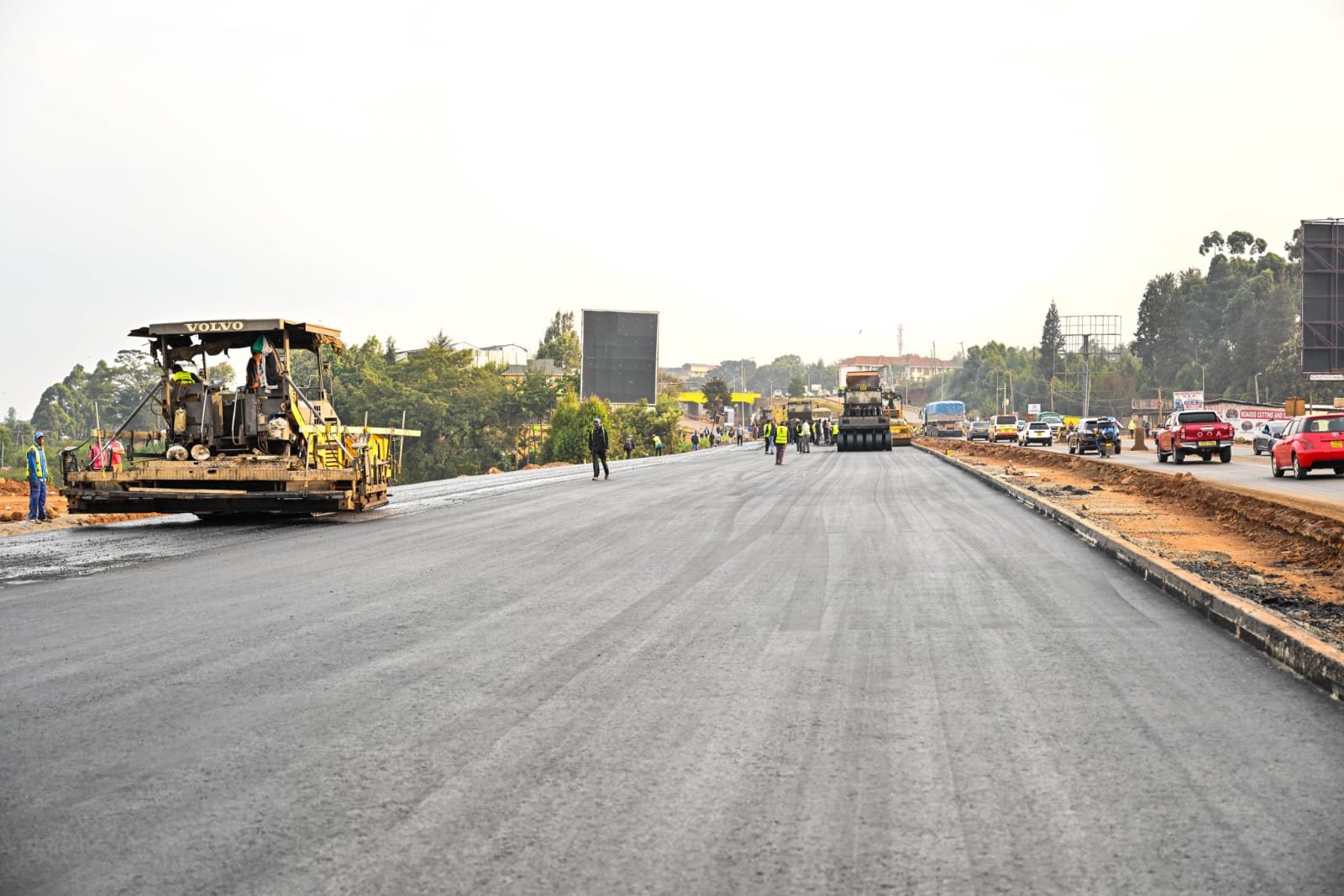
By July 2025, over 393 out of the 580 stalled road projects had restarted. Heavy machinery rolled back onto sites that had been silent for years.
In Nyeri, along the Nyeri–Othaya–Kangema (B23) road, periodic maintenance, drainage upgrades and re‑carpeting kicked back into gear, connecting tea and coffee farmers to markets. In Karatina, where construction had stalled for months over land compensation disputes, the National Land Commission finally disbursed Sh3.2 billion out of Sh4.2 billion owed, and work resumed.
On the Coast, Sh4.5 billion raised via securitisation was allocated to rehabilitate the lower section of the Mombasa Road that had been damaged during construction of the expressway, a project that had been quietly abandoned for years. In Turkana, the revival of the Kainuk Bridge and Lodwar‑Kalokol Road is linking remote communities that had been cut off from essential services.
By December 2025, the government had paid a total of Sh123 billion to clear certified works and accrued interest up to December 31, 2024. The payment programme accelerated 875 road contracts since April 2025, significantly improving project momentum across the country.
The construction sector responded almost immediately, registering a growth rate of 5.7 percent in the backdrop of the payments, pulling itself out of the technical recession that had been weighing it down.

The Human Impact: Contractors Breathe Again
Behind the big numbers, the payments have brought real relief to the people who build Kenya’s roads.
Daniel Wamahiu, a local road contractor whose pending bills were finally cleared, described what the delay had meant for his business. “Even when work is ongoing, contractors still have to pay salaries, fuel machinery, and repay banks. When payments delay for long periods, projects stall not because of lack of capacity, but because working capital runs out”.
Once payments started flowing, the impact rippled outward. The resumed projects have created or restored over 31,000 jobs, from technicians and machine operators to drivers and security guards. Suppliers of cement, steel, fuel and spare parts saw their own pending bills cleared. Banks that had classified contractor loans as non‑performing began to see repayments.
Contractors also agreed, through negotiation, to waive 35 percent of the accrued interest on their delayed payments, amounting to Sh7.5 billion of the Sh22 billion total in delayed interest charges. As of the latest update, 664 contracts have had their principal payments and interest arrears fully cleared, out of the 875 contracts initially identified.
The Ministry of Roads maintains that the securitisation model was adopted as a one‑off intervention to clear the backlog of verified arrears, while ensuring that road maintenance activities continue uninterrupted.
The Controversy: Debt or Not Debt?
Not everyone celebrated the model. Kiharu MP Ndindi Nyoro accused the government of borrowing Sh175 billion against the fuel levy in secret, without parliamentary approval or public disclosure. He argued that the borrowing was not captured in official debt records, raising grave concerns about transparency, legality and long‑term fiscal sustainability.
The government pushed back strongly. Davis Chirchir insisted the process was transparent and fully compliant with the law, with approvals from the National Treasury and the Attorney General’s office. “This is not the creation of new debt,” he said. “It is the sale of rights to a portion of the existing road maintenance levy to an SPV, which raises funds upfront to pay contractors”.
There is also a technical disagreement with the International Monetary Fund. The Treasury insists the securitised balances do not constitute public debt. The IMF considers them sovereign liabilities. Mbadi has acknowledged the difference and said the two sides will eventually agree.
Meanwhile, the Energy Ministry has distanced the fuel price hikes from the securitisation, attributing the increases to higher global oil costs and the strengthening of the US dollar.

What Comes Next: A Second Securitisation
The government is not stopping at Sh175 billion.
In November 2025, Cabinet approved a proposal to securitise an additional Sh5 per litre of the Road Maintenance Levy, bringing the total portion of the fuel levy being securitised to Sh12 per litre. The move is aimed at addressing a much larger challenge: the government currently faces Sh890 billion in outstanding obligations for already contracted road works.
The Roads and Transport Ministry explained that annual government allocations for road projects average only Sh55 billion, far below what is needed. The additional Sh5 per litre securitisation will help close this funding gap.
A second bond, estimated at Sh125 billion, is now being prepared. The Trade and Development Bank (TDB) remains the lead arranger. Together, the two securitisations could bring the total value of the roads programme to Sh300 billion.
What This Means for Contractors
For road contractors, the securitisation programme has already changed the landscape in several important ways.
Pending bills are actually being paid. After years of uncertainty, verified certificates up to December 2024 have been cleared. Contractors who were owed money since as far back as 2005 have finally received payment. This has restored a minimum level of confidence in government tenders.
There is a new financing model to understand. Contractors who previously relied solely on government allocations now need to understand how securitisation affects payment schedules. The bond programme is backed by a predictable revenue stream, which should make future payments more reliable.
The pipeline of new work is reopening. With old debts cleared, the government is once again advertising new tenders. Contractors who survived the crisis are now in a position to bid for work, but the landscape has changed. Cash flow discipline is non‑negotiable. Firms that rely on stretched working capital will still struggle.
Interest waivers may become standard. Contractors agreed to waive 35 percent of accrued interest as part of the settlement. This sets a precedent. Future negotiations with the government over delayed payments may involve similar concessions.
The sector is being watched. The securitisation model has brought unprecedented attention to the roads sector. Transparency and accountability will be higher than before. Contractors should expect stricter scrutiny on certifications, valuations, and project completion.
The Bottom Line
The Sh175 billion securitisation is not a perfect solution. It has drawn criticism, sparked a debate over debt accounting, and required contractors to swallow a significant interest write‑off. The road maintenance levy that drivers pay at the pump is now partially committed to investors for the next seven years.
But the alternative was worse. Another year of stalled projects. Another year of contractors going out of business. Another year of farmers unable to get produce to market, of students walking on broken roads, of economic potential locked in half‑built bridges.
By July 2025, over 393 of the 580 stalled projects had resumed. Today, that number is even higher. Machinery is moving. Workers are employed. The backlog of unpaid bills that strangled the sector for nearly a decade has finally been cleared.
For contractors, the message is clear: the crisis is not forgotten, but the road forward is now open. The question is who will be ready to build on it.
| Key Data Point | Figure |
|---|---|
| Stalled road projects inherited in 2022 | 580+ |
| Total pending bills cleared | Sh175 billion |
| Securitised portion of fuel levy | Sh7 per litre (out of Sh25) |
| Projects resumed by July 2025 | 393+ |
| Cabinet‑approved payment acceleration (Dec 2025) | Sh123 billion |
| Road contracts accelerated | 875 |
| Jobs created or restored | 31,000+ |
| Contractors’ interest waived | 35% (Sh7.5 billion) |
| Outstanding obligations for existing contracts | Sh890 billion |
| Second securitisation proposed | Sh5 per litre (additional Sh125 billion) |
| Total roads programme value | Up to Sh300 billion |
| Construction sector growth rate (post‑payments) | 5.7% |