For years, when investors wanted to put money into Kenyan real estate, they had two choices. Buy a building outright. Or buy shares in a listed company that happened to own property. Neither option was designed specifically for real estate. Neither offered the combination of predictable income, professional management, and liquidity that property investors in mature markets take for granted.
That changed on March 11, 2026.
On that day, Africa Logistics Properties Holdings Limited (ALPH) officially listed the ALP Industrial Real Estate Investment Trust (ALP REIT) on the Nairobi Securities Exchange (NSE) . The listing was not just another financial announcement. It was the first industrial REIT in East Africa and the first US dollar‑denominated security to trade on the NSE . For contractors, builders, and anyone watching Kenya’s construction sector, it signals something important: industrial real estate is now a recognised, institutional asset class.
What Is a REIT and Why Does It Matter?
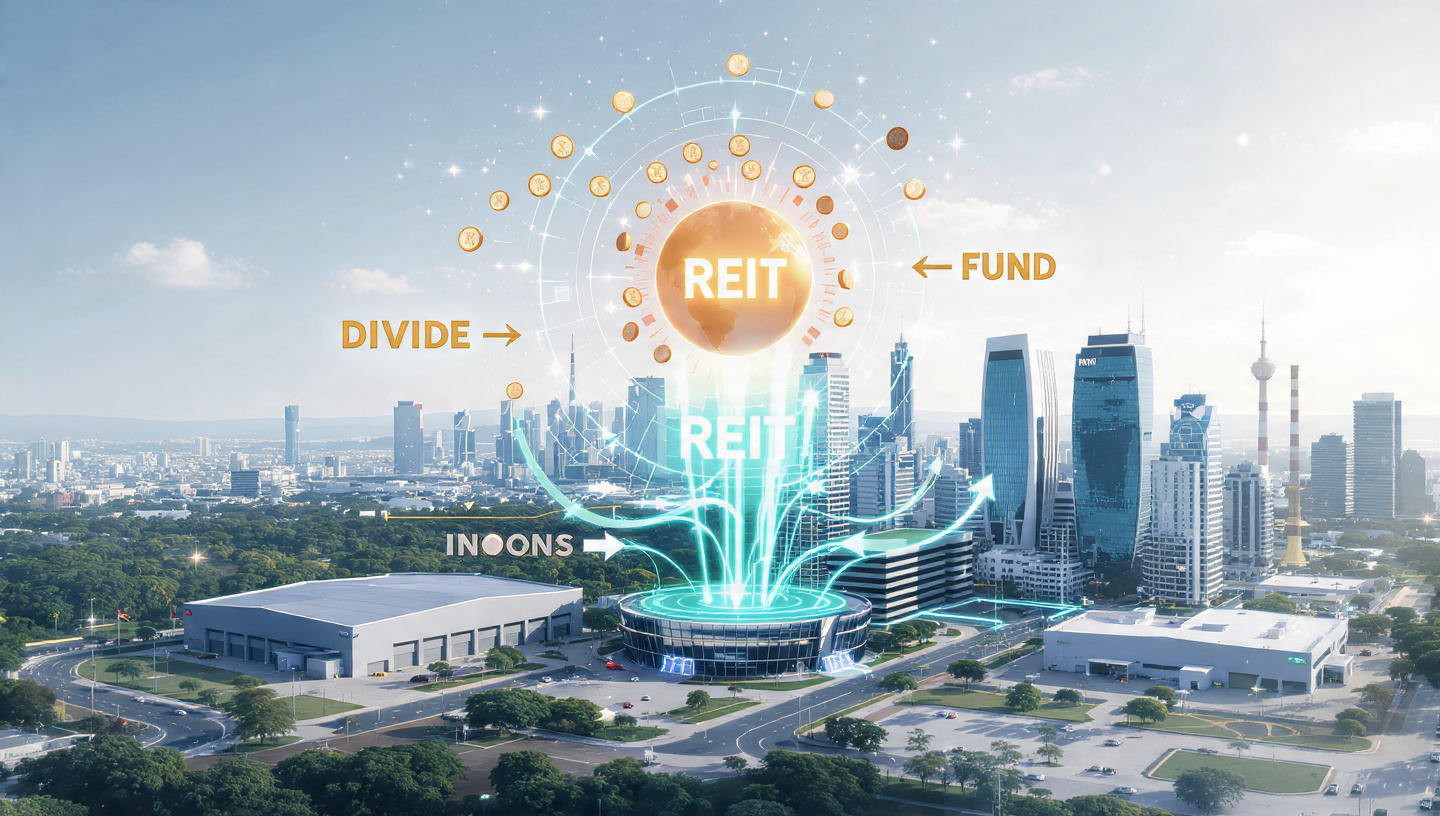
A Real Estate Investment Trust (REIT) is a company that owns, operates, or finances income‑generating real estate. Think of it as a mutual fund for buildings. Investors buy units in the trust, and the trust uses that capital to acquire or develop properties. Tenants pay rent. The trust distributes at least 80 percent of that rental income to unit holders as dividends .
The structure matters for contractors because it changes who is paying for construction projects. Instead of a single developer with limited capital, a REIT pools money from pension funds, insurance companies, and individual investors. That means larger pools of patient capital . It means projects that are funded, not just hoped for . And it means institutional clients who demand quality, timelines, and reporting.

The Numbers Behind the Listing
Kenya’s real estate market has long shown strong fundamentals – rapid urbanisation, a young and growing middle class, and government investment in infrastructure . But attracting large‑scale institutional capital has been a challenge. The ALP REIT has broken through that barrier.
The total listing was valued at USD 39.95 million (over KES 5 billion), with 39.95 million units admitted to trading on the NSE . ALPH raised USD 29.55 million from the offering, which was oversubscribed by 115 percent – a strong signal of investor confidence in industrial real estate .
The UK government anchored the listing, committing USD 24 million through two development finance vehicles . The Private Infrastructure Development Group (PIDG) invested USD 15 million via its InfraCo platform, while the MOBILIST programme added USD 9 million . An additional USD 5 million of the PIDG commitment is earmarked for deployment as the REIT expands .
Raghav Gandhi, CEO of ALPH, framed the significance directly: “This milestone underscores Kenya’s growing capital markets maturity and the increasing attractiveness of industrial real estate as a sustainable investment class. The participation of PIDG and MOBILIST demonstrates strong international confidence in Kenya”.
The Assets Behind the Trust
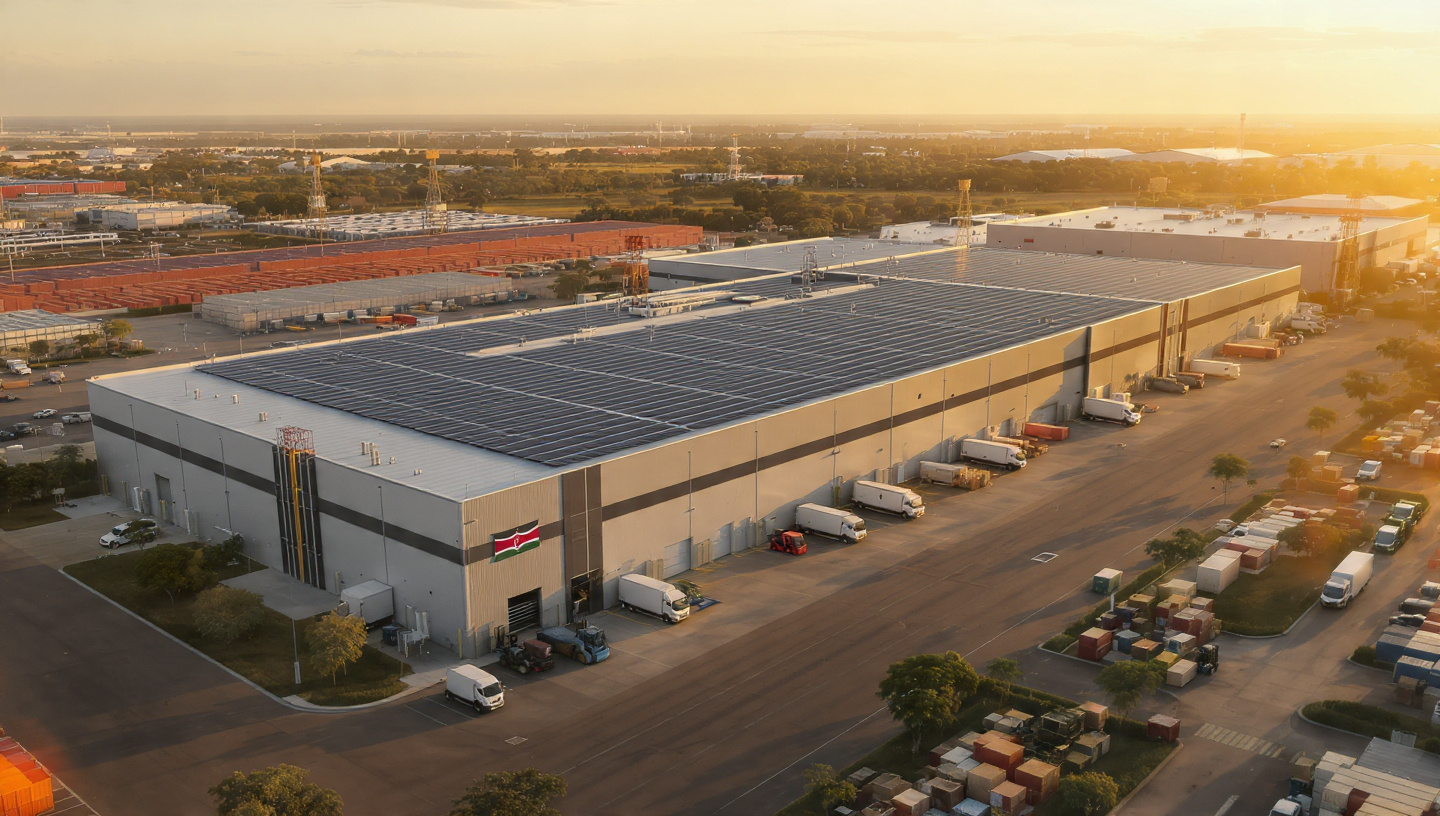
A REIT is only as good as the properties it owns. The ALP REIT is seeded with two operational industrial parks developed by ALPH since 2016 .
| Property | Location | Size | Grade |
|---|---|---|---|
| ALP North | Tatu City (north of Nairobi) | 50,000 sqm | Grade A logistics facility |
| ALP West | Tilisi corridor (west of Nairobi) | 20,000 sqm | Grade B |
Both facilities meet IFC EDGE Advanced green building standards, meaning they are certified for significant efficiencies in energy, water, and materials . These are not dusty godowns. They are modern, institutional‑grade warehouses designed to support Kenya’s growing manufacturing, fast‑moving consumer goods (FMCG), retail distribution, and regional supply chain sectors .
A third development, ALP West Kivu, covering 10,500 square metres, is already under construction and expected to be completed in the third quarter of 2026 . While not currently in the REIT, it may be added as the vehicle scales .
Claire Jarratt, Head of Investment Management at InfraCo (PIDG’s investment arm), noted: “Having anchored the establishment of REITs for affordable housing in Nairobi, PIDG is familiar with the REIT structure, and we know that it works to mobilise vital new sources of capital for economic development”.

Why Industrial Real Estate? Why Now?
The listing did not happen in a vacuum. Several trends converged to make industrial real estate an attractive investment class .
- E‑commerce growth: More Kenyans are shopping online, driving demand for modern warehousing and last‑mile distribution centres .
- Supply chain formalisation: Businesses are moving from ad‑hoc storage to professional logistics operations, seeking efficiency and inventory management .
- Manufacturing expansion: Government efforts to boost local production require industrial space that is reliable, accessible, and compliant.
- Infrastructure investment: Roads, rail, and ports are improving, making logistics corridors like Tatu City and Tilisi more valuable .
Ross Ferguson, Programme Lead for MOBILIST, explained the broader ambition: “MOBILIST is proving that underwriting and anchoring first‑of‑their‑kind public listings can unlock entirely new pathways for investment in frontier markets. In Kenya, creating listed products that domestic pension funds can invest in is essential to reducing their over‑reliance on government debt and directing long‑term capital to the businesses that drive growth”.
The Green Credential
One detail that sets the ALP REIT apart is its environmental certification. The trust was admitted as the first inductee into the NSE Sustainable Finance Centre of Excellence, an initiative supported by FSD Kenya to promote ESG principles across capital market instruments .
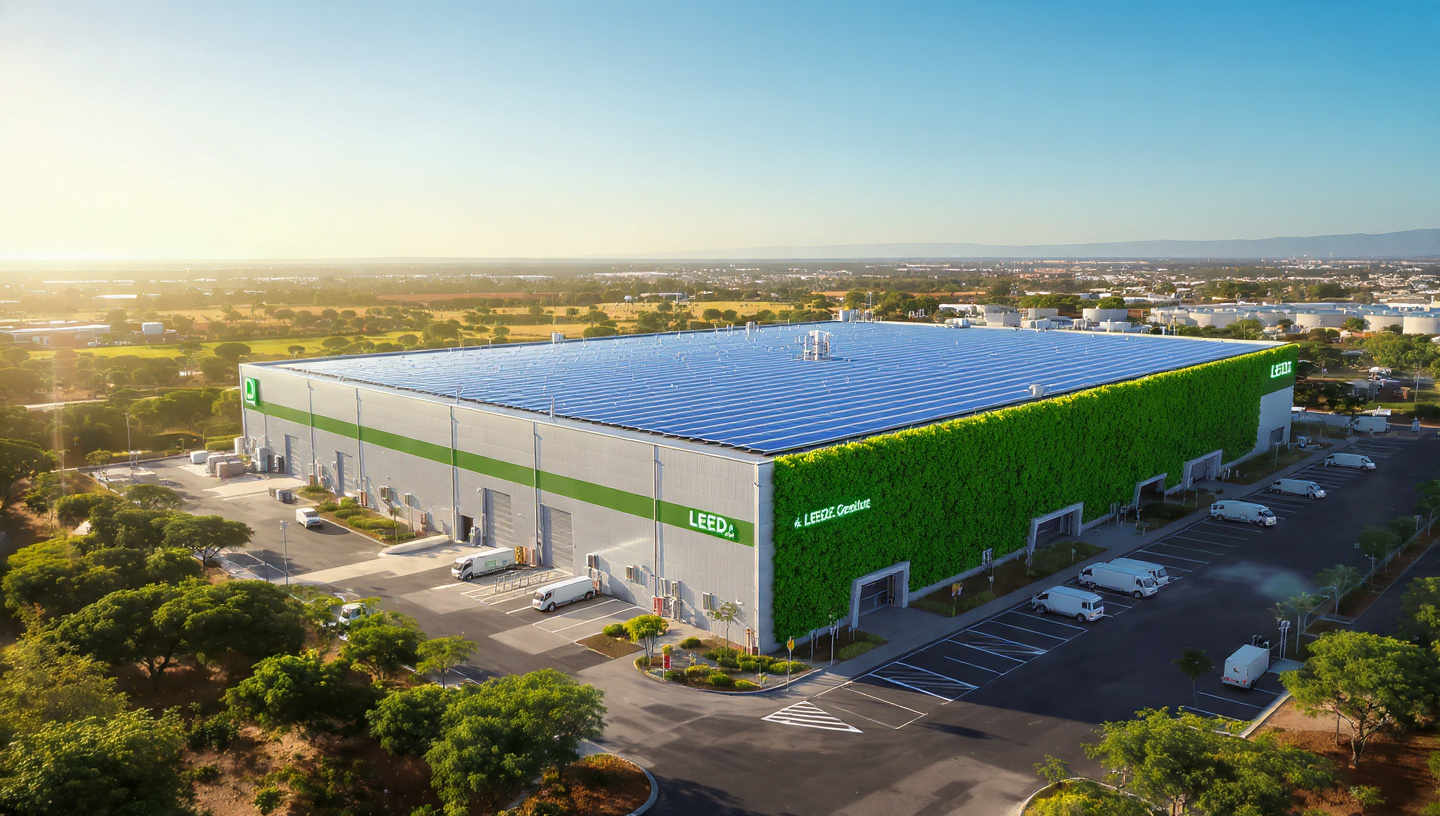
For contractors, this signals a direction of travel. Industrial buildings are no longer just functional boxes. They are expected to meet IFC EDGE standards for energy efficiency, water conservation, and material efficiency . ALP’s warehouses are among the first in Africa to achieve this certification .
This has practical implications. Rooftop solar generation is being considered for future buildings . Tenants – often multinational corporations – increasingly demand sustainable facilities. Contractors who can deliver green industrial buildings will have a competitive edge.
What This Means for Contractors
Let us move from finance to the building site. How does the ALP REIT affect you?
First, a new client type is emerging. REITs are institutional investors. They have professional asset managers. They require detailed reporting, clear timelines, and high‑quality delivery. They are not the kind of client who delays payment or changes scope mid‑project. Winning work for a REIT can lead to repeat projects as the trust expands.
Second, industrial construction is becoming a specialist niche. The ALP REIT focuses on modern warehousing and logistics facilities – not apartments, not offices, not malls. Contractors who develop expertise in industrial specifications (floor loadings, ceiling heights, dock levellers, power supply, fire suppression, and security systems) will find a dedicated market.
Third, the pipeline is growing. ALP is already developing its next phase, ALP West Kivu. The REIT structure allows for future acquisitions and developments. As the trust scales, more construction opportunities will arise – not just for ALP, but for other developers who may follow with their own REIT listings.
Fourth, quality and sustainability are non‑negotiable. The ALP REIT’s assets are IFC EDGE certified. Future developments will need to meet similar standards. Contractors must understand green building practices – not as an optional extra, but as a baseline requirement.
Fifth, partnerships matter. Industrial REITs often work with a network of contractors, consultants, and suppliers. Building a relationship with a REIT sponsor or asset manager can lead to a steady stream of work, rather than one‑off projects.
Frank Mwiti, Chief Executive of the NSE, described the listing as “a historic milestone” that opens the local market to the rapidly growing industrial logistics sector. “By bringing this asset class to the NSE, we are providing investors with a seamless gateway to Africa’s industrial logistics sector, combining the stability of hard currency with the growth potential of regional infrastructure”.

The Bigger Picture: What Comes Next
The ALP REIT is not an isolated event. It is a template.
If successful, other industrial REITs may follow. Other asset classes – affordable housing, healthcare facilities, data centres – could adopt similar structures. The NSE gains a new product that attracts institutional capital. Pension funds gain a hard‑currency investment that hedges against local currency depreciation . Developers gain a new source of funding that does not rely on bank loans or expensive equity.
For contractors, this means watching the REIT space. When a REIT announces a new development, that is a tender opportunity. When a REIT acquires land, that is a signal of future work. Understanding how REITs operate – their timelines, their quality standards, their decision‑making processes – translates directly into winning bids.
The ALP REIT raised USD 34.55 million and was oversubscribed by 115 percent . That demonstrates real demand. The proceeds will support the development and expansion of modern warehousing and industrial facilities across Kenya, addressing demand driven by e‑commerce, trade, and manufacturing . Improved warehousing capacity is seen as critical to reducing supply chain inefficiencies, lowering storage costs, and enhancing export competitiveness.

The Bottom Line
March 11, 2026, was not just a good day for investors. It was a signal to every contractor in Kenya that industrial real estate has arrived as a serious, funded, institutional asset class.
The ALP REIT is the first. It will not be the last.
Contractors who understand industrial specifications, green building standards, and institutional client expectations will find themselves in demand. Those who do not will watch from the side.
The warehouses are being built. The REIT is listed. The capital is there.
The only question is who will build the next phase.
