While the Affordable Housing Programme dominates headlines and public discourse, a massive institutional housing project has been quietly taking shape across the country. It does not get the same media attention. There are no flashy ground-breaking ceremonies with cabinet secretaries every week. But the numbers are substantial, and the work is real.
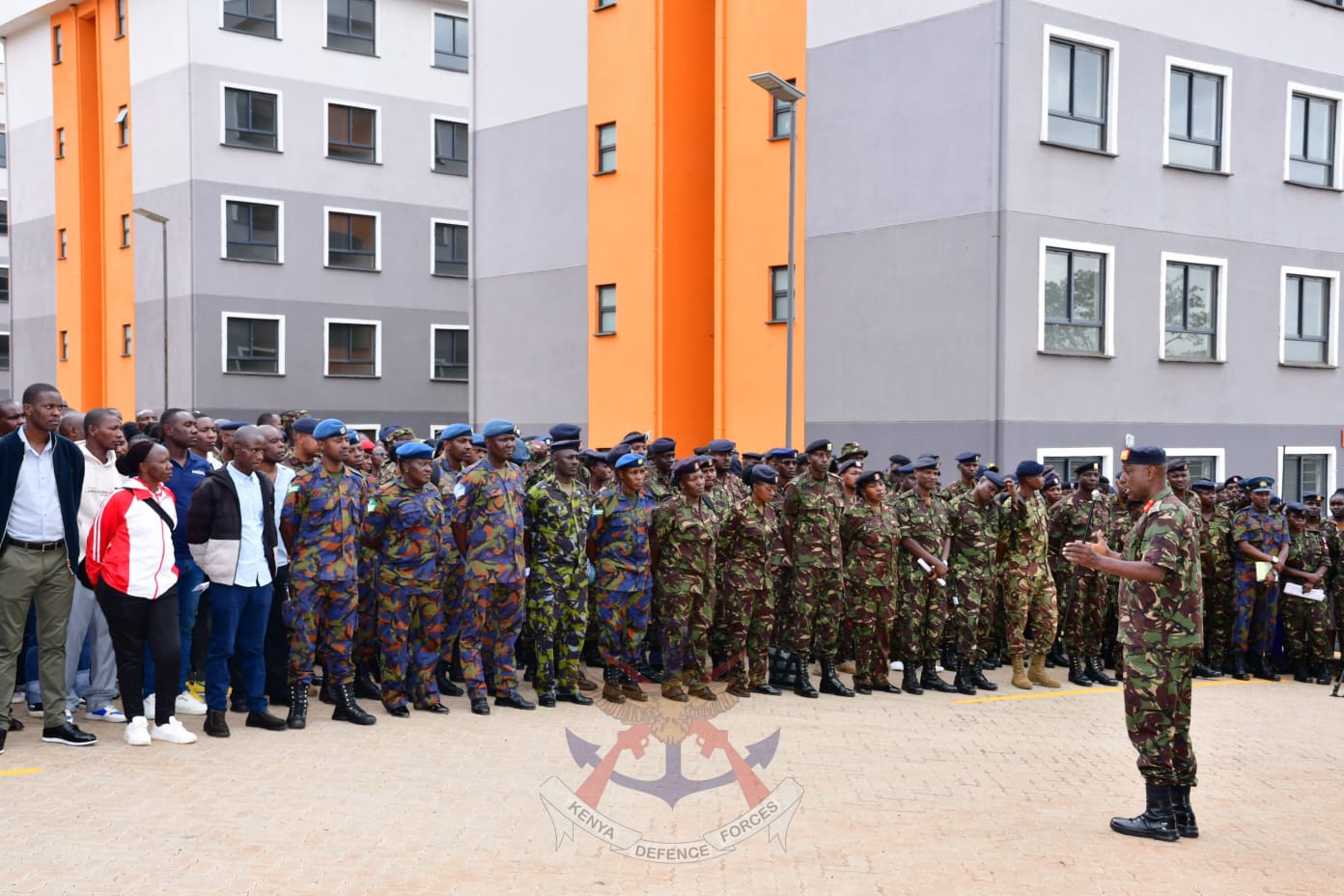
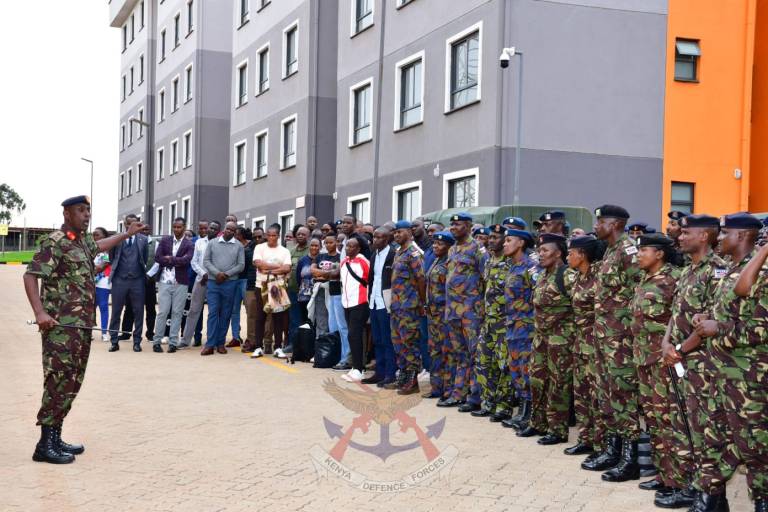
The government is constructing more than 47,000 housing units for police, prison officers, and other security agencies under the National Institutional Housing Programme .
To date, 2,092 units have been completed, 9,555 units are under active construction, and another 24,720 units are under procurement .
This is not a small side project. It is a sustained, multi-year pipeline of government-backed construction with predictable funding and clear timelines.

Where the Work Is Happening
The projects are spread across multiple sites, covering both the National Police Service and the Kenya Defence Forces.
For the police and prison services, housing developments are underway at:
- GSU headquarters in Ruaraka
- Kiganjo Training School
- GSU Training School in Embakasi
These are not small pilot projects. They are substantial developments designed to house thousands of officers and their families in decent, modern accommodation.
For the Kenya Defence Forces, projects are active in:
- Kahawa
- Embakasi
- Langata
- Moi Airbase
- Lanet
- Gilgil
- Nanyuki
- Mariakani camps
The 500-unit development at Roysambu is already complete. The remaining projects are scheduled for completion between January 2026 and January 2028 .

Why This Programme Exists
For decades, security forces in Kenya have lived in substandard housing. Old colonial-era buildings, cramped quarters, and dilapidated facilities have been the norm. This affects morale, retention, and operational effectiveness.
The National Institutional Housing Programme was designed to address this gap systematically. It is not an election-year promise. It is a long-term plan with phased implementation, dedicated funding, and clear accountability structures.
The government’s reasoning is straightforward. A police officer or soldier who lives in decent housing is more focused on their job. A family that has a safe, dignified home is more stable. And the construction itself creates jobs and stimulates local economies near military and police barracks.
What This Means for Contractors
For construction firms, the security forces housing programme offers several advantages over private sector or even county government work.
First, payment is more predictable. Institutional housing is funded through central government budgets. While no government payment is guaranteed to be instant, the risk of the kind of pending bills that plague county projects is lower. The funding streams are more established.
Second, the procurement process is structured. Tenders for security forces housing go through the Ministry of Defence or the National Police Service procurement systems. These are formal, rule-based processes. If you meet the requirements and bid competitively, you have a fair chance.
Third, the work is repeatable. Once you complete one phase or one site, you are well positioned for the next. The government prefers contractors with demonstrated performance on similar projects.
Fourth, the scale is manageable. A 500‑unit housing development is significant but not overwhelming. It is within reach for medium‑to‑large Kenyan contractors. And the projects are spread across multiple sites, allowing firms to bid on packages that match their capacity.
The Challenges
That said, working on security forces housing comes with its own difficulties.
Site access can be restricted. Barracks and military installations are not open to the public. Contractors must comply with security protocols, vetting of personnel, and restricted movement of materials and equipment. This adds layers of coordination that are not present on civilian sites.
Specifications may be unique. Housing for security forces often includes specific security features—reinforced doors, controlled access points, durable finishes—that differ from standard residential construction. Contractors need to understand these requirements.
Location matters. Many of these sites are outside major urban centres. Gilgil, Lanet, Nanyuki, Mariakani—these are not Nairobi. Mobilising labour, materials, and equipment to these locations adds cost and complexity.
Timelines are tight. The completion window for the remaining projects is January 2026 to January 2028. That is a compressed schedule. Contractors who take on this work must have the capacity to deliver on time.
The Opportunity for Subcontractors and Suppliers
Not every firm can bid directly for a 500‑unit housing package. But the scale of the programme creates opportunities down the supply chain.
Material suppliers: Cement, steel, roofing, tiles, paints, sanitary ware, electrical fittings—all are needed in bulk. Suppliers who can offer competitive pricing and reliable delivery will find steady demand.
Subcontractors: Civil works, electrical installation, plumbing, finishing, landscaping—each housing project requires a range of specialised trades. Established subcontractors can position themselves as partners to the main contractors.
Transport and logistics: Moving materials to sites in Gilgil, Nanyuki, or Mariakani requires reliable transport. Logistics firms with experience in remote site delivery have a role.
What Contractors Should Do Now
If you are interested in this pipeline, here is what to do.
First, register on the relevant procurement portals. The Ministry of Defence and the National Police Service have their own tender systems. Ensure your firm is registered and your documents are up to date.
Second, build experience in institutional housing. If you have never built for security forces, consider partnering with a firm that has. Joint ventures can help you gain the necessary track record.
Third, prepare for security vetting. Your key personnel will likely need security clearance. Start that process early. It can take months.
Fourth, understand the specifications. Request copies of past tender documents for security forces housing. Study the requirements. Make sure your technical team understands what makes this different from standard residential work.
Fifth, monitor the pipeline. The 24,720 units under procurement will be tendered in phases. Stay informed. Attend pre‑bid meetings. Build relationships with procurement officers.
The Bigger Picture
The security forces housing programme is often overlooked because it is not flashy. It does not involve international architects or cutting‑edge materials. It is functional housing for people who serve the country.
But for contractors, it represents something valuable: predictable, government‑backed work with a clear social purpose.
While private sector projects come and go with market cycles, institutional housing has a defined need and sustained funding. The security forces are not going to shrink. Their housing needs are not going away. The 47,000 units target is just one phase. There will be more.
For builders who can navigate the unique requirements of this niche, the security forces housing programme offers steady work, reliable payment, and the satisfaction of building homes for those who protect the nation.
⁸