Here is a number that should stop any civil engineering contractor mid-thought.
Fifty large dams. Two hundred medium-sized dams. More than one thousand small dams.
That is what the government intends to construct across Kenya under the proposed National Infrastructure Fund .
The Cabinet Secretary for Water, Sanitation and Irrigation, Eng. Eric Mugaa, announced the programme in March 2026 while commissioning projects in Kuria East Constituency. His message was direct. Rain-fed agriculture has become unreliable. Climate change is real. The only way to produce food consistently throughout the year is to harvest rainwater at scale .
For builders, this is not distant policy. It is a multi-year pipeline of earthworks, concrete structures, pipeline installation, and related infrastructure. The question is whether you are positioned to participate.

The Scale You Need to See
Let us break down what 1,250 dams actually means.
| Category | Number | Typical Scope |
|---|---|---|
| Large dams | 50 | Major river damming, significant earthworks, high-capacity reservoirs, hydro-power potential |
| Medium dams | 200 | Valley dams, irrigation schemes, county-level water supply |
| Small dams | 1,000+ | Community water pans, hillside dams, farm-level storage |
These are not arbitrary categories. They represent different procurement streams, different contracting requirements, and different opportunities.
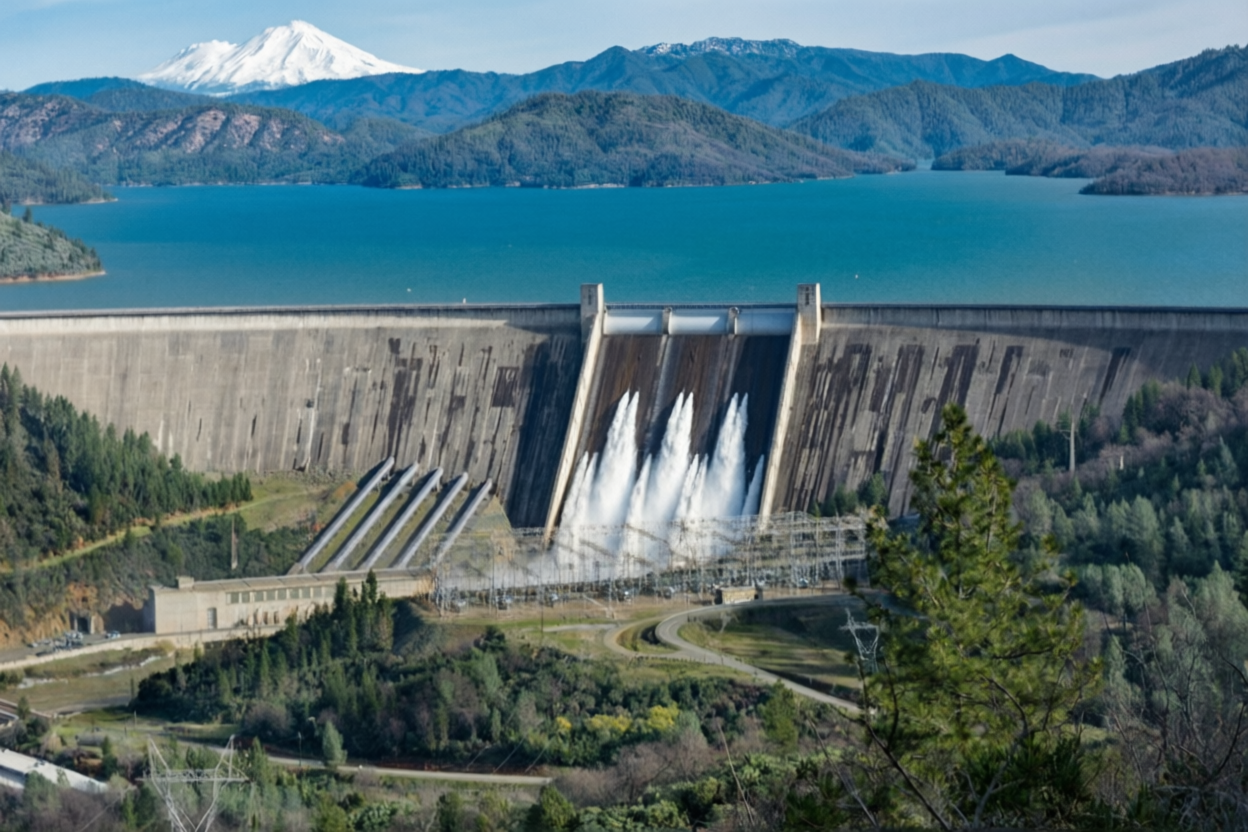
The large dams will require international contractors or strong local consortia with proven capability. The medium dams open doors for established Kenyan civil engineering firms. The small dams create work for county-level contractors who understand local terrain and community engagement.
What Is Already Moving
While the full programme rolls out, specific projects are already advancing.
The Gosebe Dam in Kuria East Sub-County is moving forward with a water treatment plant featuring a 12-million-litre capacity draw-off system. In Ntimaru Sub-County, a 2.7-kilometre treated water pumping main will be laid to supply water to existing tanks .
Four boreholes are being drilled. Six ablution blocks are under construction. The Nyamanche water supply project will serve about 3,700 households in Kegonga town and surrounding areas, including spring protection works, storage reservoirs, a modern pumping station, and an 11-kilometre distribution network .
These are not distant promises. They are active sites with budgets allocated and timelines set.
The Mega Projects Behind the Numbers
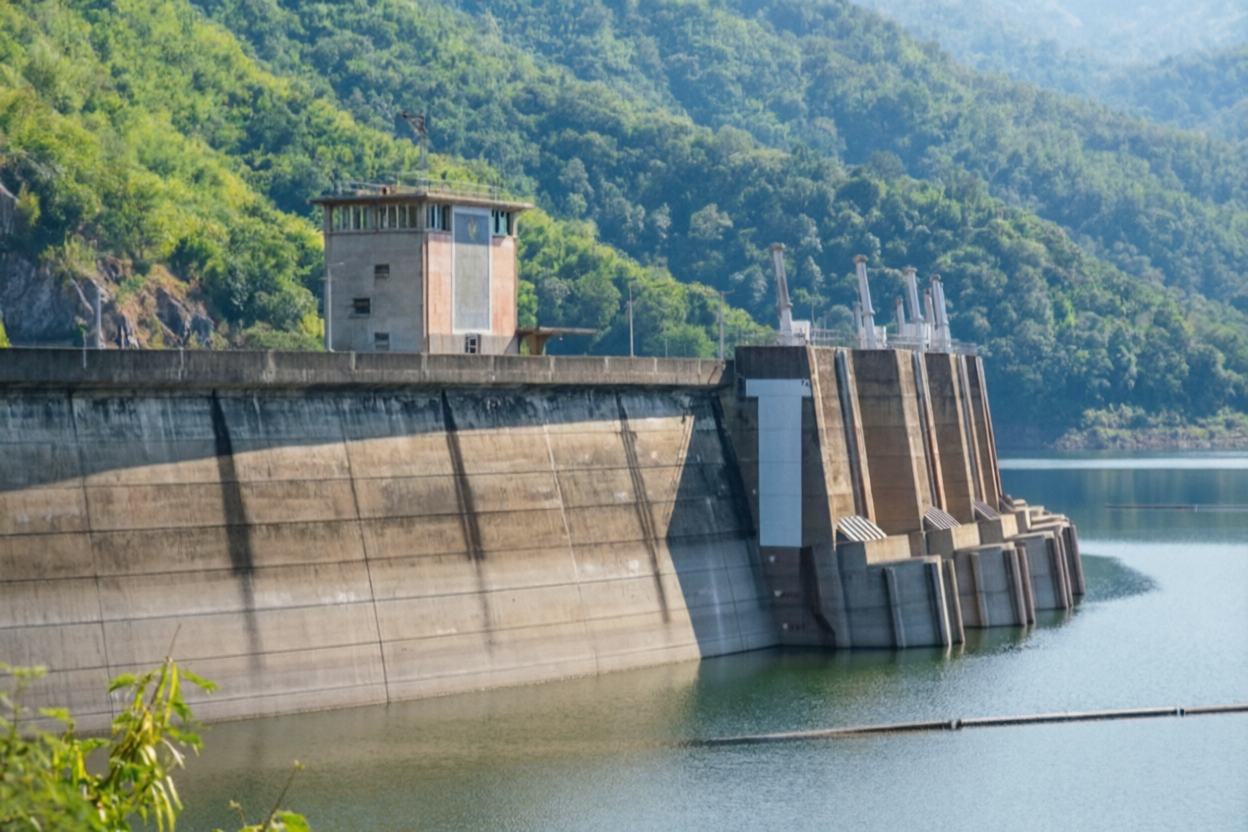
Beyond the 1,250 target, several flagship dams are advancing through the Public Private Partnerships framework. The PPP Directorate and State Department for Irrigation are collaborating to accelerate five multipurpose dams designed to bring two million acres under irrigation .
The High Grand Falls Dam (also called Kibuka Falls) spans Kitui, Tharaka Nithi, Tana River, and Garissa counties. It is designed as a critical anchor for the national water-food-energy nexus .
The Galana Dam received a major boost in January 2026 when the National Irrigation Authority signed a Sh40 billion deal with China Communications Construction Company. The dam will be developed at Galana Kulalu in Tana River and Kilifi counties, irrigating up to 120,000 hectares of land. Once completed, it will store 305 million cubic metres of water and deliver an average of one billion cubic metres annually, enabling at least two cropping seasons per year .
President William Ruto described it as a major milestone in strengthening food security and reducing reliance on rainfall-dependent farming .
Other priority dams include Barsalanga Dam in Isiolo and Samburu, Radat Dam in Baringo, and Lowaat Dam in Turkana. These target arid and semi-arid lands where traditional farming has become increasingly unviable .
The Daua Dam in Mandera, Thuci Dam in Embu, Magwagwa Dam in Nyamira and Kisumu, and Soin-Koru Dam in Kericho and Kisumu are also flagged as priority projects at various stages from feasibility to implementation.

The Numbers Behind the Promise
The State Department for Irrigation estimates that 18 priority multipurpose dams could unlock irrigation for about 1.59 million acres, generate 935 megawatts of hydropower, and improve water supply for nearly 1.8 million households .
That is not small.
In northern Kenya, mapping has already identified significant irrigation potential. Mandera county has about 400,000 acres mapped. Turkana county has nearly 500,000 acres suitable for irrigation through underground water exploration .
In Tana River county, about 271,000 acres have been opened to private investors for large-scale production of sugarcane, rice, and maize .
The Galana-Kulalu irrigation project alone has opened 200,000 acres to private investors and is expected to produce up to 14 million 90-kilogram bags of maize annually at full commercialisation—enough to bridge Kenya’s maize deficit estimated at about 10 million bags.

The Financing Framework
None of this is cheap. The proposed National Infrastructure Fund Bill 2026 aims to raise up to Sh5 trillion to finance key projects including roads, railways, ports, airports, irrigation, and water storage .
Financing sources will include proceeds from privatisation and disposal of government assets . The fund is designed as an “entirely Kenyan” vehicle, with each shilling raised from privatisation expected to attract ten shillings from the private sector .
The recently launched National Irrigation Sector Investment Plan (NISIP) aims to mobilise 61 per cent of irrigation financing from the private sector, signalling a deliberate shift toward blended financing and private sector-driven growth .
For contractors, this means understanding the PPP framework is no longer optional. The days of fully government-funded mega-projects are giving way to structured partnerships where private capital carries significant weight.

What This Means for Different Players
| Who | What This Programme Means for Them |
|---|---|
| Large civil engineering contractors | Opportunity to bid for major dam packages, potentially in consortium with international firms. PPP experience becomes a competitive advantage. |
| Medium-sized Kenyan contractors | The 200 medium dams and associated works (pipelines, treatment plants, distribution networks) offer substantial opportunities. Focus on quality, safety, and delivery track record. |
| Small county-level contractors | The 1,000+ small dams, water pans, and community schemes create local work. Relationships with county governments and understanding community engagement matter. |
| Suppliers and material vendors | Cement, steel, pipes, pumps, and valves will be needed in massive quantities across multiple sites. Positioning as a reliable supplier with capacity matters. |
| Consultants and engineers | Feasibility studies, detailed design, supervision, and quality assurance across 1,250 sites means sustained professional work. Specialisation in hydraulic structures is valuable. |
The Northern Kenya Dimension
President Ruto has emphasised that the infrastructure push targets regions previously overlooked. In March 2026, he announced that this year’s Madaraka Day celebrations will be held in Wajir for the first time since independence—a deliberate signal .
Speaking during an Iftar dinner at State House, he said: “Northern Kenya is as good as any part of the Republic of Kenya.” The National Infrastructure Fund, he explained, is the instrument to correct historical marginalisation .
The first 12 dams funded under the National Infrastructure Fund are significant, and 60 per cent of them are in northern Kenya .
For contractors, this means mobilising to counties that may have been off your radar. Wajir, Mandera, Garissa, Turkana, Marsabit—these are where the work is heading.

The Progress Already Made
While the 1,250 target grabs headlines, the sector has already been building.
Data from the State Department for Irrigation shows land under irrigation increased from approximately 664,000 acres in 2022 to about 762,000 acres by mid-2025—a 15 per cent growth driven by flagship projects and farmer-led initiatives .
During the same period:
- 50 community irrigation projects were completed, 86 are ongoing
- 66 micro-irrigation schemes were completed
- 143 community water pans and small dams were completed, 65 are ongoing
- 8,724 household water pans were completed
Water harvested for irrigation rose from 128.6 million cubic metres in 2022 to over 170.5 million cubic metres by June 2025 .
The Thiba Dam has enabled double cropping in Mwea. The Thwake Dam in Makueni and Kitui counties is over 94 per cent complete and will deliver 150,000 cubic metres of clean water daily to Konza Technopolis and surrounding areas, plus 20 megawatts of hydropower .
The Muruny–Siyoi Dam in West Pokot is 85 per cent complete and will benefit over 350,000 residents in Kapenguria, Makutano, Kacheliba and surrounding communities .
These are not future projects. They are existing evidence that the system works.
The Question for Builders
For construction firms reading this, the questions are straightforward.
Do you understand the PPP framework? Do you have relationships with international contractors who might need local partners? Do you know which counties are prioritised for the first 12 dams? Have you registered with the relevant procurement portals? Do you have the technical capacity to deliver quality work on time?
If the answer to any of these is no, consider whether that needs to change.
This is not a speculative pipeline. It is announced policy with financing mechanisms being put in place, contracts being signed, and sites being activated. The government aims to bring over one million acres under irrigation through mega and medium dams supported by the National Infrastructure Fund .
The work is coming. The only question is who will do it.
The Bigger Picture
Stepping back, the dam construction programme sits within a broader shift. Irrigation Principal Secretary Ephantus Kimotho put it plainly: “Irrigation is evolving from public infrastructure provision towards commercially viable agricultural ecosystems driven by private investment” .
For builders, this means the skills you develop on dam projects—earthworks, concrete structures, pipeline installation, quality control—translate directly to other infrastructure sectors. Roads. Railways. Buildings. All require similar discipline.
The contractors who perform well on these projects will be positioned for the next wave. The contractors who wait and watch will find themselves competing for leftovers.
Fifty large dams. Two hundred medium dams. One thousand small dams.
That is the scale. The question is whether you are ready to build.